


Today, October 12, 2025, marks the start of a new phase in Europe’s border management. The European Union has officially launched the Entry/Exit System (EES) — one of the most significant changes in recent years to how people travel to and from the Schengen area.
This new system will gradually replace traditional passport stamping with automated electronic registration, allowing for a more efficient and secure management of entries and exits for travellers from non-EU countries visiting the Schengen area for short stays (up to 90 days within a 180-day period).
⏺️ A common system for all EU external borders
Implementation begins today across Europe’s external borders, with a gradual rollout over the coming months. Each Member State will decide where to activate the system first — at airports, ports, or land crossings — before full deployment expected by April 2026.
Travellers will need to register their biometric data (facial image and fingerprints) and passport details the first time they cross an external border. This information will be stored in a shared EU database, making future crossings faster and more secure.
⏺️ Who will be affected?
The EES applies to third-country nationals — travellers who are not citizens of the EU, Iceland, Liechtenstein, Norway, or Switzerland — entering or leaving the Schengen area for short stays.
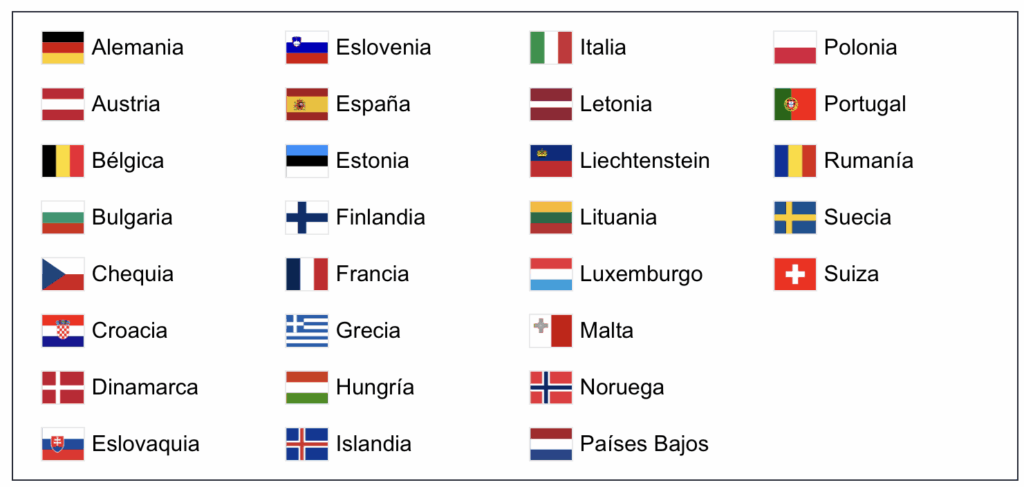
This includes tourists, business visitors, and anyone without a residence permit or long-stay visa. The new system will affect external borders in Spain, Germany, France, Italy, Portugal, Greece, Belgium, Poland, Hungary, Croatia, and others.
⏺️ More efficient and secure border management
The EES aims to modernize border controls and strengthen EU security by providing faster identification and reducing the risk of overstays or identity fraud.
According to the European Commission, it will also help streamline checks and improve coordination between border authorities across Member States.
⏺️ Gradual implementation
For the first six months, traditional passport stamping will coexist with the new digital process. Member States will choose which border points to include first, so travellers may experience different procedures depending on their entry location.
Some airports and land borders will include self-service kiosks and, in some cases, travellers will be able to pre-register data through mobile applications to speed up the process.
⏺️ Exemptions
The EES will not apply to EU citizens, holders of valid residence permits, or nationals of Andorra, Monaco, San Marino, or the Vatican. Diplomats, NATO military personnel, and holders of long-stay visas (for study, research, or intra-company transfers) are also excluded.
⏺️ A new era for travelling to Europe
The launch of the Entry/Exit System represents a major shift in the way people travel to Europe. Although the transition will be gradual, all non-EU travellers will need to adapt to this new digital model, which marks the beginning of a new era in European border management.
At ARC Legal Abogados, we closely follow the implementation of the new Entry/Exit System (EES) and its implications for travellers and residents in Spain. If you are planning to travel to Europe or need guidance on the new entry procedures, we can help you plan your journey and assess how this change may affect you depending on your immigration status.
ARC Legal Abogados is a law firm specialized in Immigration Law. We advise and handle all types of residence, visa, work permit, and Spanish nationality procedures, both for individuals and companies.
If you need guidance or would like us to review your case, please do not hesitate to contact us. We will be happy to assist you at every step of your immigration process.
Related articles
- The European Parliament strengthens the EU visa suspension mechanism
- Key changes for non-EU travellers: the EU’s new Entry/Exit System will launch in October
- British citizens living in Spain: get your TIE before the new EU border control system comes into effect
¿Prefieres leer este artículo en español 🇪🇸? Aquí te dejamos el enlace: Así funciona el nuevo Sistema de Entradas y Salidas (EES) que entra hoy en vigor en la UE
The information provided in this article is for general informational purposes only and does not constitute legal advice. While we strive to offer accurate and up-to-date information, immigration regulations are subject to change and interpretation by the competent authorities. For personalized and up-to-date legal guidance, we recommend consulting a qualified immigration lawyer.