

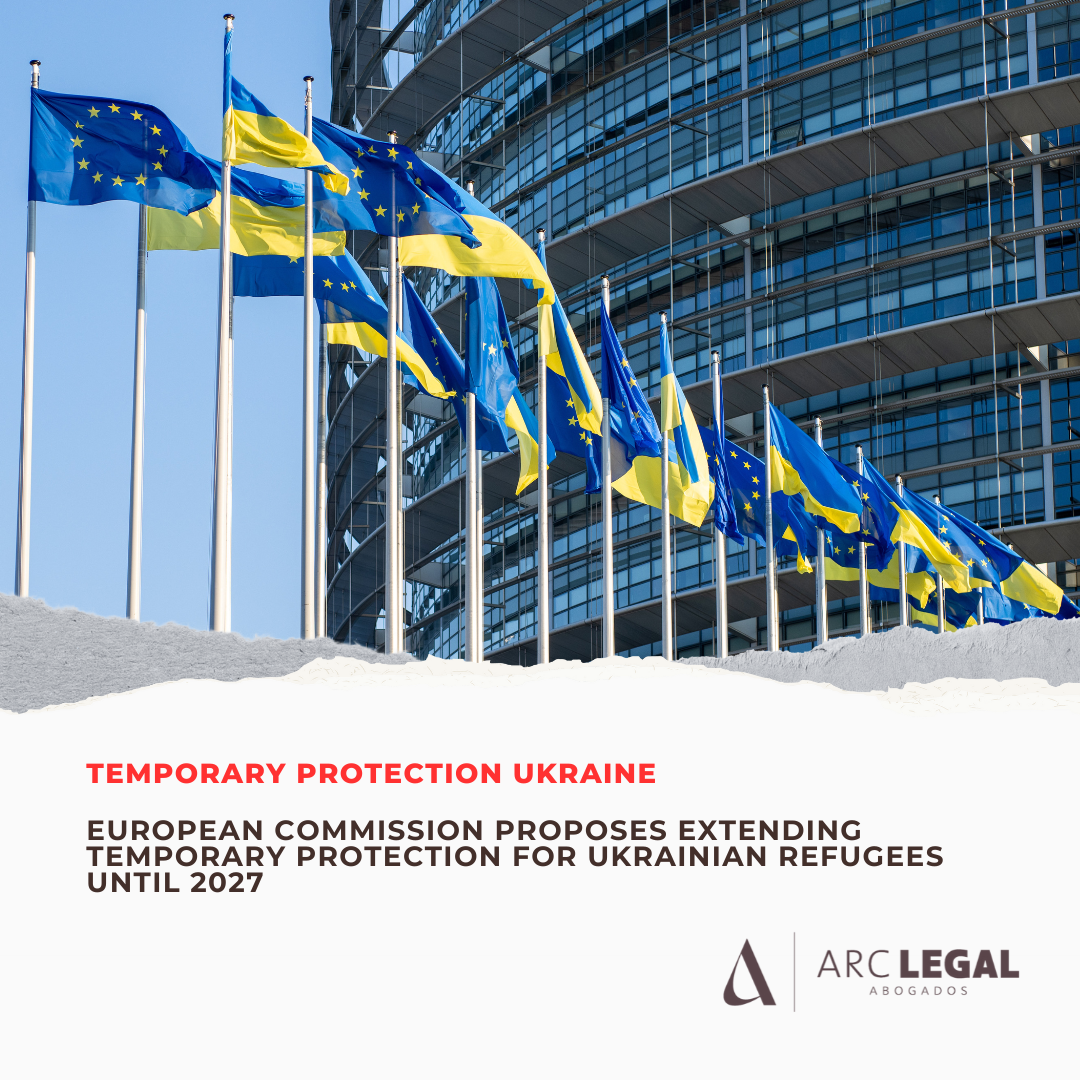
Since the beginning of the war in Ukraine, over 4.3 million displaced people have found refuge in the European Union thanks to the temporary protection mechanism. Now, the European Commission has proposed a new extension of this protection until 4 March 2027, reaffirming its ongoing commitment to Ukraine and to those who have fled the conflict.
Below you’ll find the official proposal published by the European Commission, which outlines the legal basis, objectives, and planned measures for this new extension of the temporary protection regime:
⏺️ What does this extension mean for Ukrainian refugees?
The Commission’s proposal responds to the ongoing armed conflict and the worsening humanitarian situation in Ukraine. This new extension would offer legal certainty to both refugees and Member States, maintaining a common framework of rights and guarantees for those who fled the country following the Russian invasion on 24 February 2022.
This means that people currently under temporary protection in the EU will continue to have access to essential services such as housing, healthcare, education, and employment without needing to apply for asylum. It also helps prevent the overload of national asylum systems.
⏺️ A coordinated transition for those who fled Ukraine
In addition to the extension, the Commission has proposed a Council Recommendation to prepare for a gradual transition to other legal statuses or, when possible, a safe return to Ukraine. Member States are encouraged to:
- Facilitate transitions to residence permits linked to employment, studies, or long-term residence;
- Promote voluntary return programmes, in coordination with Ukrainian authorities;
- Establish Unity Centres to serve as information hubs on integration and return options;
- Maintain close cooperation between Member States and Ukraine through platforms like the Temporary Protection Registration Platform.
⏺️ Why is temporary protection still needed for people from Ukraine?
The war continues. According to recent data, over 12.7 million people in Ukraine are in urgent need of humanitarian assistance, and more than 3.7 million remain internally displaced. Civilian casualties continue to rise, and many regions face ongoing attacks on critical infrastructure such as electricity, water, and heating.
Return intention surveys show that most displaced people still do not consider it safe to go back. Ending temporary protection prematurely would force millions to apply for asylum simultaneously, placing immense pressure on national systems.
⏺️ What are the next steps?
The Council of the European Union must now formally debate and adopt both the proposal to extend temporary protection and the Council Recommendation for a coordinated transition. The process is expected to be completed in the coming weeks to allow Member States to prepare for the renewal of permits and administrative procedures. Meanwhile, technical and political meetings between the Commission, Member States, and Ukrainian authorities will continue to ensure a consistent application across the EU.
⏺️ At ARC Legal, we help you understand what lies ahead
At ARC Legal, we closely monitor all legislative changes and updates in immigration law to provide you with informed, accurate, and tailored legal advice. If you have questions about your legal status or need guidance on what steps to take next, don’t hesitate to reach out. We’re here to help.
Related articles
Prefieres leer este artículo en castellano 🇪🇸, aquí puedes: La Comisión Europea propone extender la protección temporal a refugiados ucranianos hasta 2027
- Three years of war in Ukraine: 235,000 Ukrainians hosted in Spain under temporary protection
- Extension of Foreigners’ Identity Cards (TIE) for Ukrainians under temporary protection
- More articles on Asylum and International Protection
The information provided in this article is for informational purposes only and does not constitute legal advice. While we strive to ensure that the content is up to date and accurate, immigration law is subject to changes and to interpretation by the relevant authorities. For personalized and updated guidance, we recommend consulting with a specialized lawyer.