

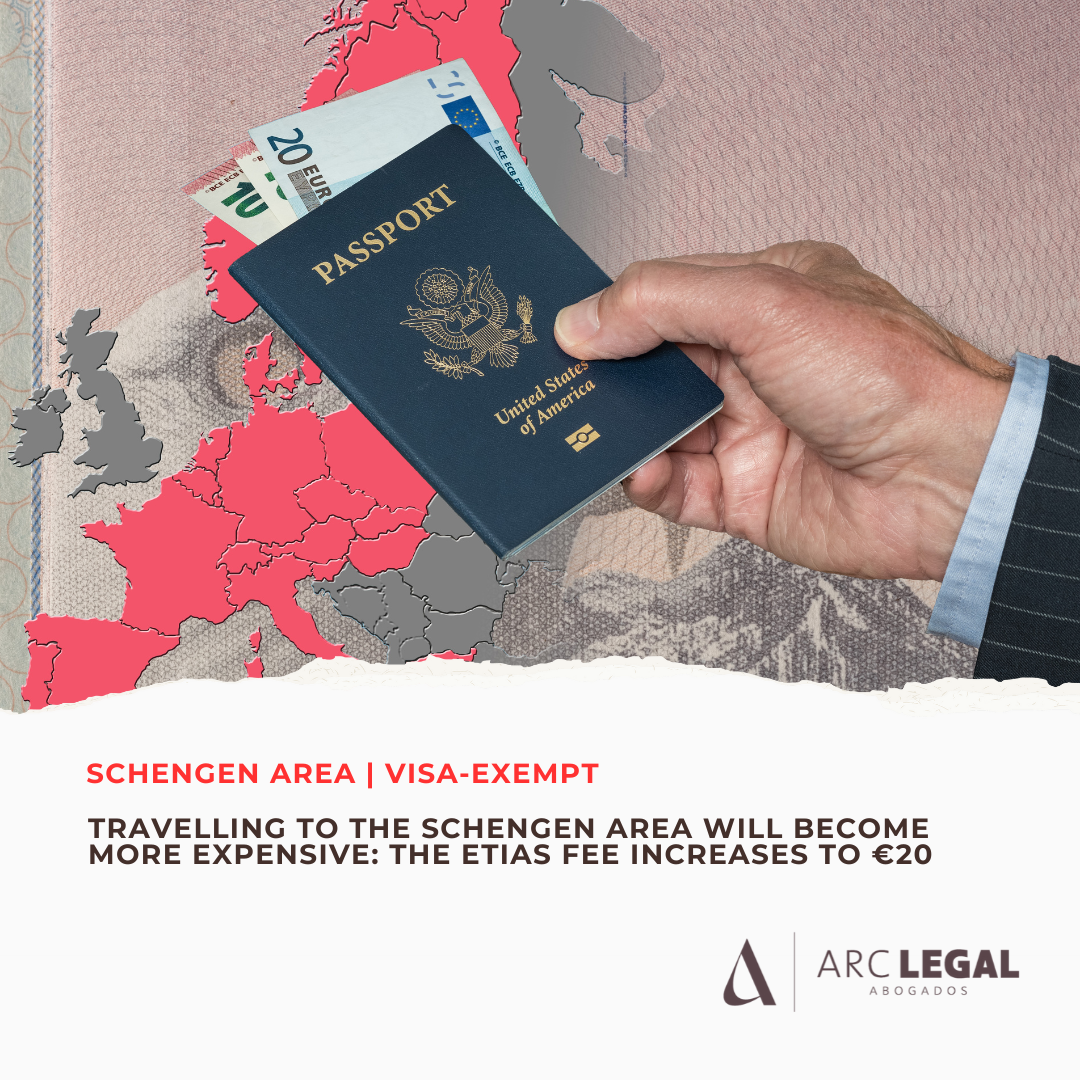
The Official Journal of the European Union has published Commission Delegated Regulation (EU) 2025/1411, which amends the amount of the travel authorisation fee under the European Travel Information and Authorisation System (ETIAS).
Once the new regulation enters into force, the fee that travellers must pay for an ETIAS authorisation will increase from €7 to €20 per application.
⏺️ Why is the ETIAS fee increasing?
The European Commission has justified this increase based on several factors:
- Cumulative inflation: since 2016, inflation in the European Union has risen by 30.12%.
- A growing number of visa-exempt travellers, which is expected to continue increasing in the coming years.
- Technological upgrades and new functionalities added to the ETIAS platform, raising operational and maintenance costs.
In addition, the Commission highlights the need to align the ETIAS fee with similar travel authorisation programmesin other countries (such as the U.S. ESTA or Canada’s eTA) to ensure fairness and global parity.
⏺️ ETIAS: A new requirement for visa-exempt travellers
The European Travel Information and Authorisation System (ETIAS) is an automated system designed to strengthen security and migration controls for travellers from countries that do not require a visa to enter the Schengen Area.
Although its launch has been postponed several times, the European Commission expects the system to become operational during 2026, with an initial transitional period.
Travellers will need to apply for authorisation before their trip via the official website or mobile app, paying the corresponding fee. The authorisation will be valid for three years or until the passport expires, allowing multiple entries into the Schengen territory.
⏺️ Practical implications of the change
While the fee increase to €20 may seem minor, it marks the beginning of a broader operational phase for ETIAS — one that will involve new border checks and more complex data management systems.
For visa-exempt travellers — particularly frequent visitors to Europe — it will be essential to apply for the authorisation well in advance, as some applications may require additional documentation or information.
⏺️ ARC Legal Abogados
At ARC Legal, we assist our clients and international businesses with all aspects of international mobility and entry requirements to the European Union.
If you are planning to travel to Europe or advise non-EU nationals, our team can help you understand the new rules and their practical implications, including the changes introduced by ETIAS.
Contact us for personalised advice on mobility, visas, and residence in Spain.
Related articles
- British Nationals in Spain: Five Years Since the Withdrawal Agreement and the TIE Process
- How the New EU Entry/Exit System (EES) Works
- The EU Strengthens Its Mechanism to Suspend Visa Exemptions
¿Quieres leer este artículo en español 🇪🇸? Aquí te dejamos el enlace: Viajar al espacio Schengen será más caro: el ETIAS aumenta a 20 euros
The information provided in this article is for general informational purposes only and does not constitute legal advice. While we strive to offer accurate and up-to-date information, immigration law is subject to changes and interpretation by competent authorities. For personalised legal assistance, we recommend consulting a qualified immigration lawyer.