

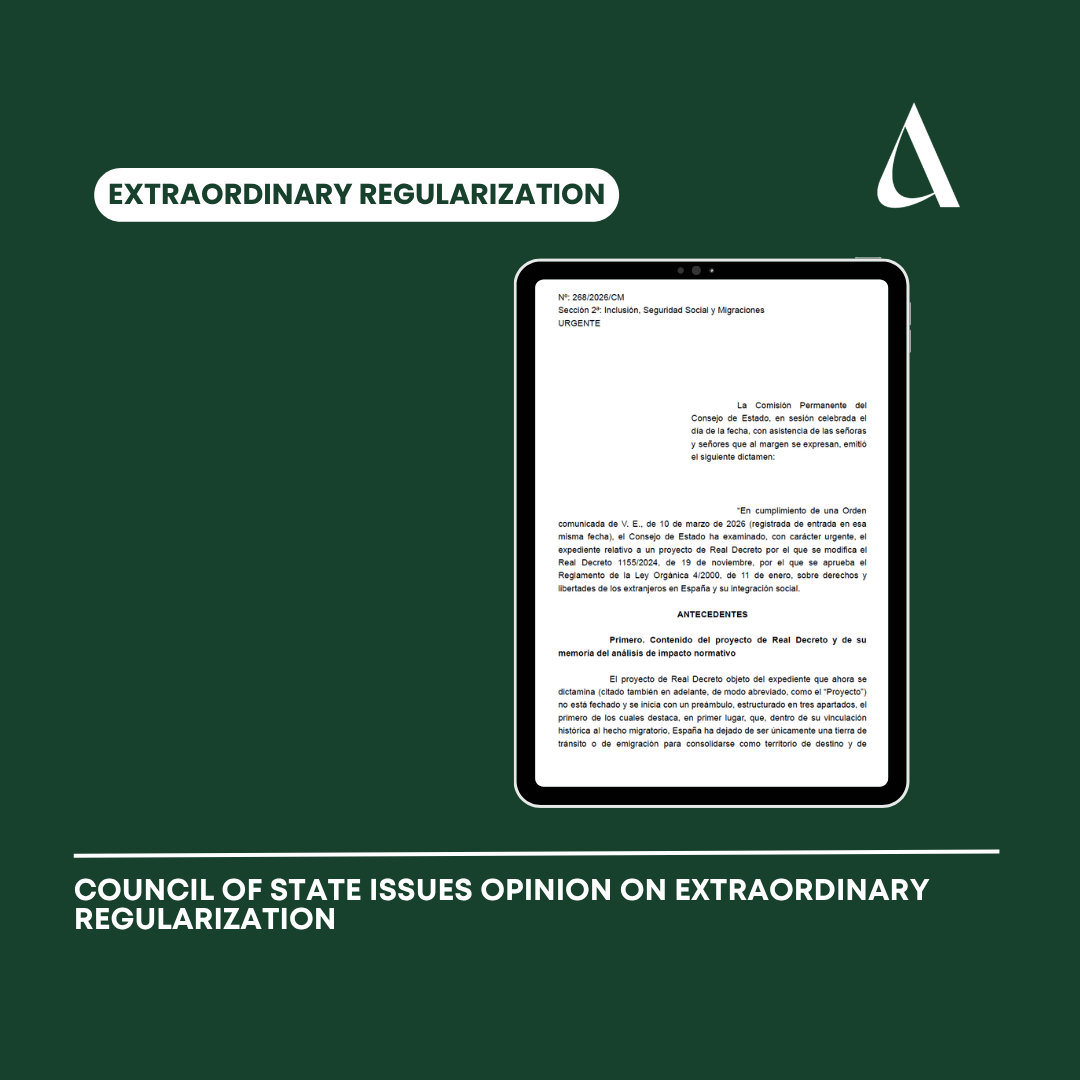
The Extraordinary Regularization process in Spain continues to move forward in its legislative development.
In this context, the Consejo de Estado has recently issued and published its Opinion on the draft Royal Decree that will regulate this exceptional procedure. The Opinion was approved by the Permanent Commission during its meeting held on April 9.
The issuance of this Opinion represents a key step in the legislative process, as it involves a legal review of the draft before its potential final approval by the Government in the Council of Ministers.
It is expected that, during the Council of Ministers scheduled for Tuesday, April 14 — or, at the latest, on April 21 — the final approval of the text will take place, marking the beginning of the application submission phase.
At ARC Legal, we have already begun a detailed legal analysis of this Opinion in order to assess its practical impact and the real implications for foreign nationals who may benefit from this process.
If you have questions about this procedure or any other immigration or Spanish nationality matter, you can contact our team to assess your situation. At ARC Legal, we handle each case individually, with a practical and client-focused approach, guiding you through every stage of the process, from the initial assessment to the final resolution of your application.
Related publications
- Extraordinary Regularization 2026: Practical analysis for Asylum applicants
- Extraordinary Regularization 2026: Government publishes a second draft with key changes
- Imminent Approval of the Extraordinary Regularization
Prefer to read this article in Spanish 🇪🇸? You can find it here: El Consejo de Estado publica su Dictamen sobre la Regularización Extraordinaria
The information provided in this article is for informational purposes only and does not constitute legal advice. While we strive to provide accurate and up-to-date information, immigration regulations are subject to change and interpretation by the competent authorities. For tailored and up-to-date legal advice, we recommend consulting with a specialized lawyer.